Professional Certifications
These certifications, credentials, and applied learning programs represent a unified approach to AI system design—integrating intelligence, governance, process, and operations into a single architecture.
This foundation supports the transition from AI 1.0 (static outputs) to AI 2.0: systems that understand process, evolve over time, and operate with transparency and accountability in real-world environments.
Collectively, they represent the full lifecycle of AI systems—from strategic intent and governance through system design, deployment, runtime operation, and continuous evolution over time.
Executive AI, Governance & Strategy
Foundational grounding in AI strategy and governance, focused on how intelligent systems are designed, constrained, and aligned for real-world use within enterprise and regulated environments.
- NIST AI Risk Management Framework (AI RMF)
- MIT Sloan + Computer Science and Artificial Intelligence Laboratory (CSAIL) — Artificial Intelligence: Implications for Business Strategy
- MIT Sloan + MIT Schwarzman College of Computing — Making AI Work: Machine Intelligence for Business and Society
Microsoft AI Certifications & Applied Learning (Azure, Copilot, Enterprise AI)
Extensive hands-on exploration of the Microsoft AI ecosystem, covering AI agents, Copilot extensibility, Azure AI Foundry, data and orchestration layers, and responsible AI frameworks—providing practical exposure across the full lifecycle of AI system design and operation.
- Microsoft Certified: Azure AI Fundamentals (AI-900)
- Microsoft Learn (AI) — Ongoing Profile
- Microsoft AI Skills Challenges (5×)
- Microsoft Ignite Challenges — 2024 (2×)
AI & Generative AI — Applied & Executive Coursework
Applied exploration of modern AI capabilities, spanning generative systems, model interaction, and practical implementation patterns across enterprise use cases.
Strategy, Governance & Adoption
Focused on how AI is positioned, governed, and integrated within organizations—addressing risk, ethics, and the practical realities of adoption at scale.
Together with technical foundations, this reflects the full lifecycle of AI systems—from strategic intent and governance design through implementation, deployment, and operational use.
- Generative AI for Business Leaders with Dr. Brian Charles
- Career Essentials in Generative AI by Microsoft and LinkedIn
- Ethics in the Age of Generative AI
- How to Use Generative AI: Building an AI-First Mindset
Technical & Applied Foundations
Hands-on exposure to the underlying tools and methods that power AI systems, enabling practical understanding of how models are built, evaluated, and deployed.
Together with strategy and governance, this reflects the full lifecycle of AI systems—from initial design and model interaction through deployment, evaluation, and continuous refinement.
- AI Python: Basics of AI Python Coding
- Data Landscape of GenAI for Project Managers
- Generative AI Overview for Project Managers
- Prompt Engineering for Project Managers
- Wolfram U: Creating Custom AI Chat Personas in Mathematica (Training)
Lean Six Sigma & Process Excellence
Deep process discipline centered on variation, flow, and continuous improvement—providing the foundation for understanding how systems evolve, stabilize, and optimize over time.
- Lean Six Sigma Master Black Belt (LSSMBB)
- Lean Six Sigma Black Belt (LSSBB)
- Lean Six Sigma Green Belt (LSSGB)
- Lean Six Sigma Yellow Belt (LSSYB)
- Lean Six Sigma Practitioner II (LSSP-II)
- Lean Six Sigma Practitioner I (LSSP-I)
- Certified Process Improvement Specialist (CPIS)
Enterprise Flow & Operating System Design
Frameworks focused on connecting strategy, coordination, and execution across organizational levels—helping complex enterprises align work, improve flow, and make delivery systems visible, adaptive, and outcome-oriented.
These credentials and training programs support the architecture of organizational operating systems: translating intent into coordinated work, connecting portfolio-level direction to team-level execution, and improving how value moves through complex environments.
- OKR Certification: Leadership and Goal Setting with John Doerr
- Introduction to Flight Levels
- Professional Agile Leadership — Evidence-Based Management (PAL-EBM)
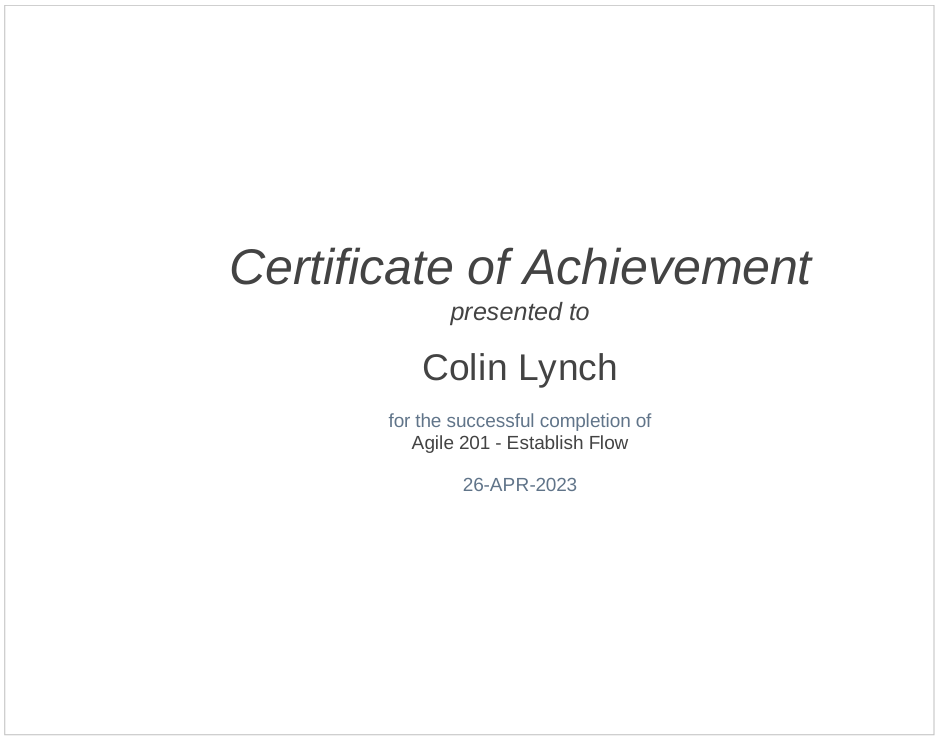
- Agile 201: Establish Flow
- Beyond SAFe® — Flow@Scale (Training)
- Team Flow Performance for Agility: Work Execution Signals (Training)
Service, Risk & Operational Governance
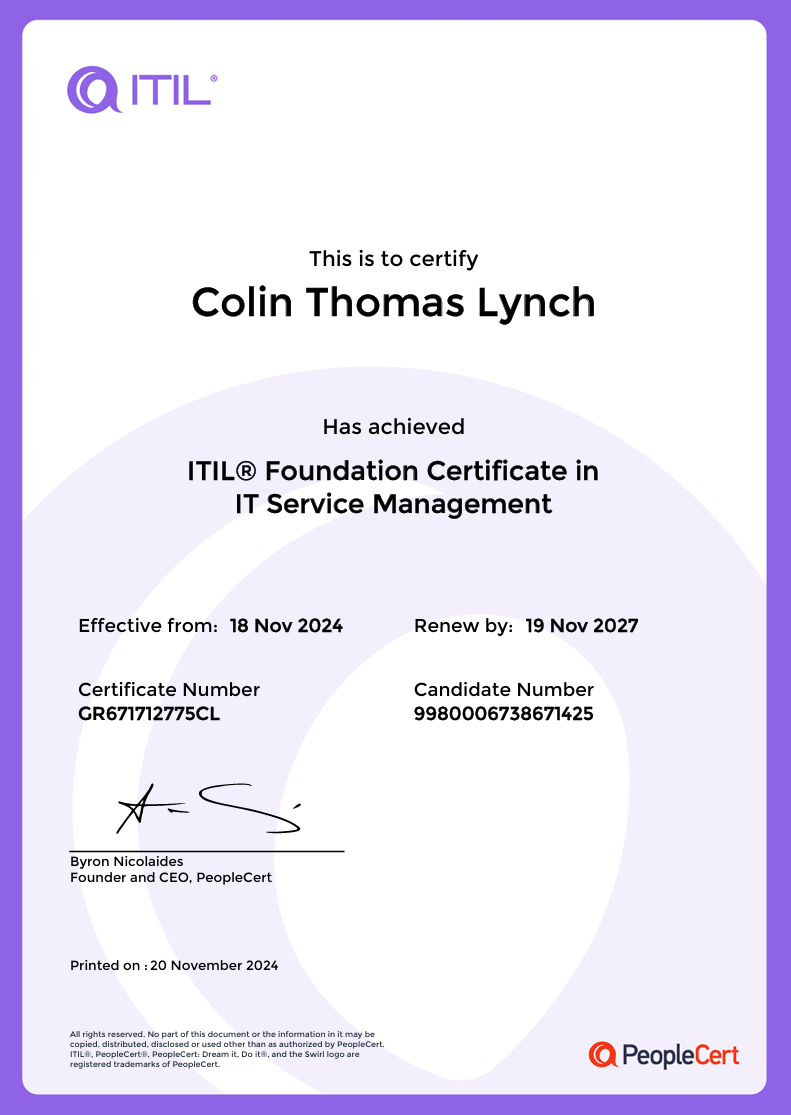
Operational frameworks focused on reliability, risk management, and lifecycle governance—ensuring systems function predictably, securely, and at scale in production environments.
Agile, Product & Systems Delivery
Delivery methodologies for building and evolving complex systems, emphasizing iterative development, feedback loops, and the structured progression from concept to deployment.
- Professional Scrum Master II (PSM II)
- Professional Scrum Master I (PSM I)
- Professional Scrum Product Owner II (PSPO II)
- Professional Scrum Product Owner I (PSPO I)
- Professional Scrum Developer I (PSD I)
- Scaled Professional Scrum (SPS)
- Professional Scrum with Kanban I (PSK I)
- Professional Scrum with User Experience I (PSU I)
- Professional Scrum Facilitation Skills (PSFS)
- Professional Scrum Product Backlog Management Skills (PSPBM)
- Large Scale Scrum and Systems Thinking (LeSS)
- Disciplined Agile Essentials
- AI in Agile Delivery
Leadership, Communication & Organizational Effectiveness
Human-centered leadership and communication frameworks that align teams, clarify intent, and enable effective decision-making within complex and changing environments.
- Dale Carnegie Course — Leadership Skills
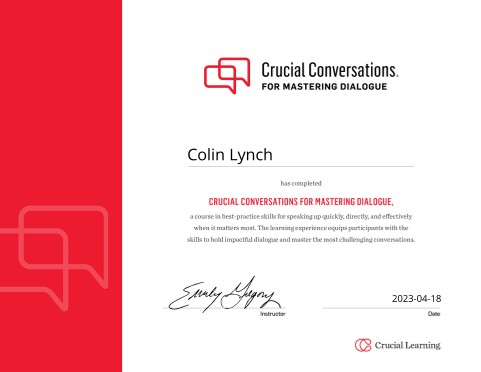
- Crucial Conversations for Mastering Dialogue
- Inclusive Leadership
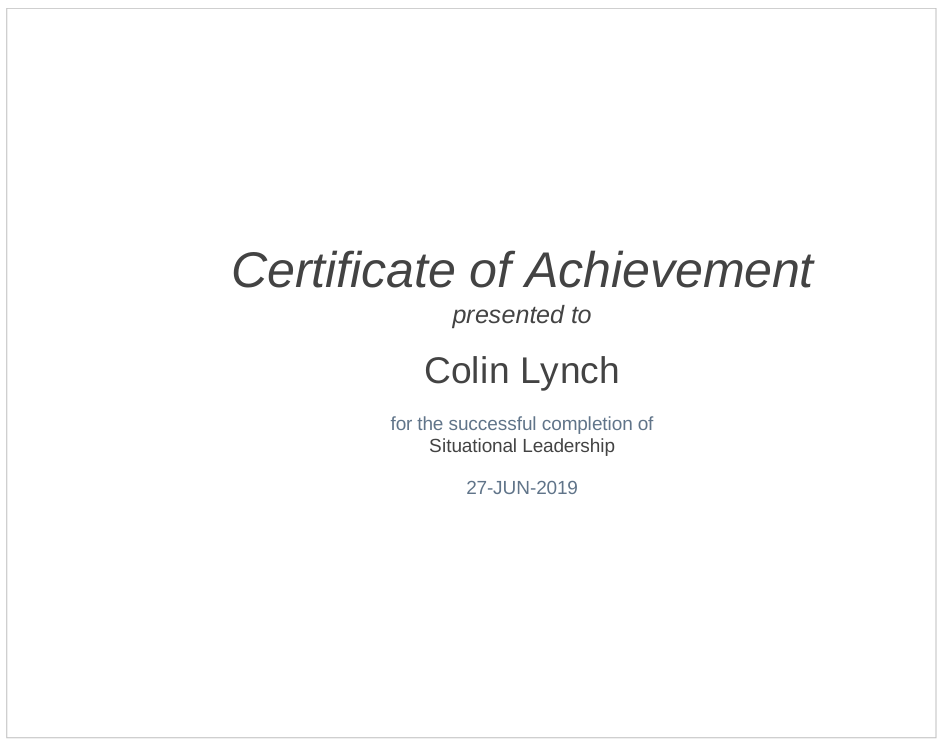
- Situational Leadership II
- Agile Leadership
- Professional Agile Leadership I (PAL I)
Requirements & Analysis
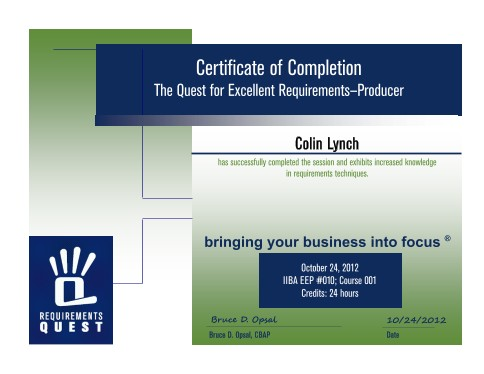
Structured approaches to defining problems, capturing intent, and translating business needs into executable system designs.